Tactic 15. Drop Peering Cost
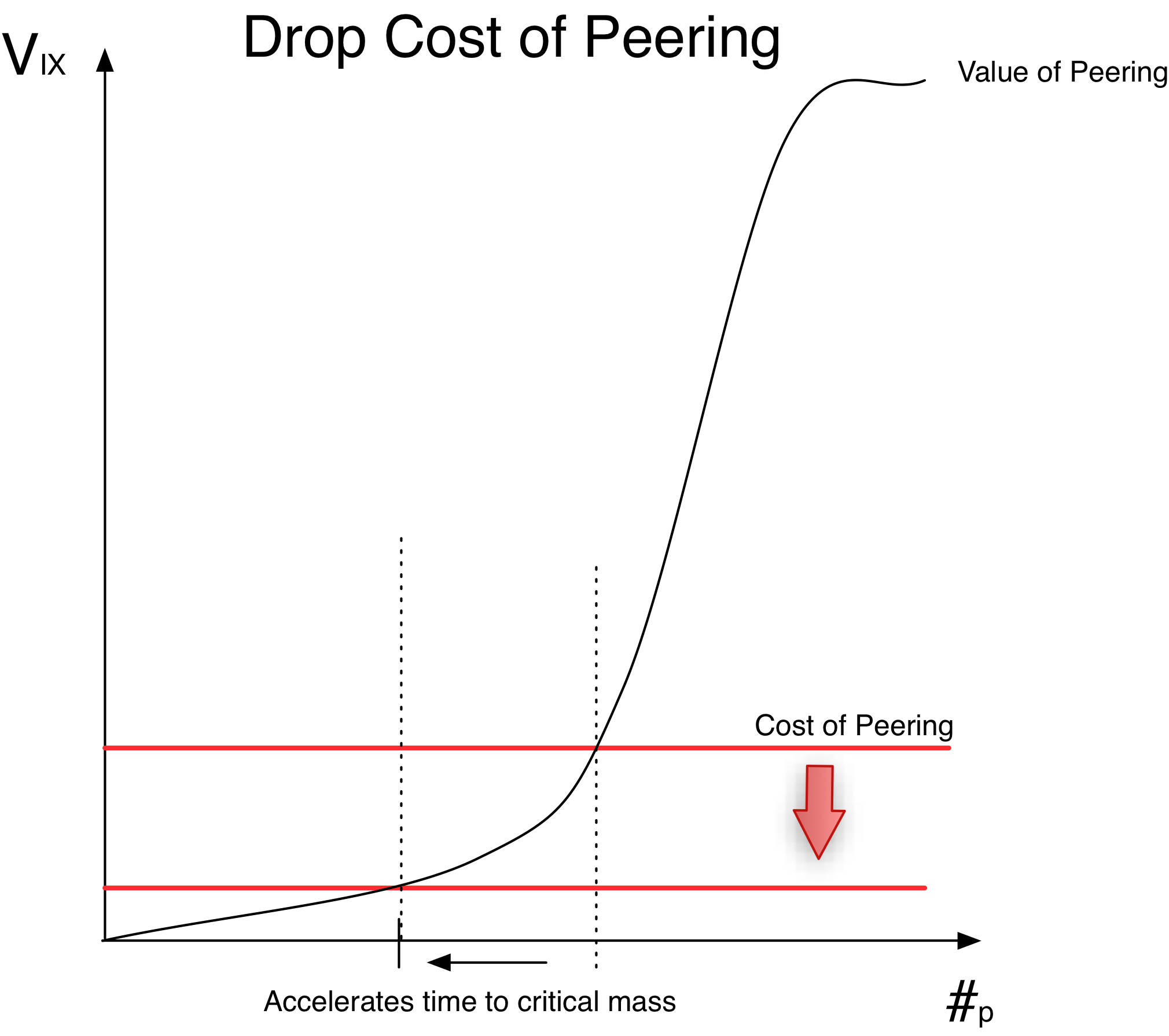
When there is not enough value in the IXP to attract ISPs, an IXP operator must find a way for it to make sense for ISPs to join. One approach is to reduce the cost of peering for early-adopter ISPs to entice them into participating. This tactic is shown graphically in Figure 13-11. With this approach it will take less traffic for the ISPs to justify building into the IXP.
Value of the IXP = f(p, r, v, m) - c
p: The population
r: The routes available
v: The volume of traffic exchanged
m: The market perception of the IXP
c: The cost of participatioon at the IXP
Note some costs of peering are within the control of the IXP operator, and some are not. An IXP operator can certainly make a free peering port available, waive install fees, and even provide free colocation, but the ISPs will still have the cost of equipment, transport into the IXP, staff time to configure the equipment, legal, etc. These costs need to be justified, and even then there is a leap of faith that the IXP will grow into something worthy of participation.
Lowering the cost of peering has the following benefits:
- Easy to do
- Results in a flow of ISP names promoting the success of the IXP
- Terms are renegotiable at the end of the contract term
- Makes it easier for customers to justify participation
Lowering the cost of peering has the following drawbacks:
- Provides little or no revenue
- Sets the expectation of a perpetual free service
- Sets a low value perception because the service is free